AI in GovTech: Modernizing the Systems Everyone Depends On
Government technology shapes millions of daily interactions, yet it is often invisible until it breaks down. As public institutions face growing demands, tighter budgets, and rising expectations, the limits of legacy systems have become impossible to ignore. This article explores how artificial intelligence—used carefully and responsibly—can modernize civic and government technology by removing friction, clarifying processes, and helping public servants focus on what truly requires human judgment.

Jamie Paulson
Policy Worker
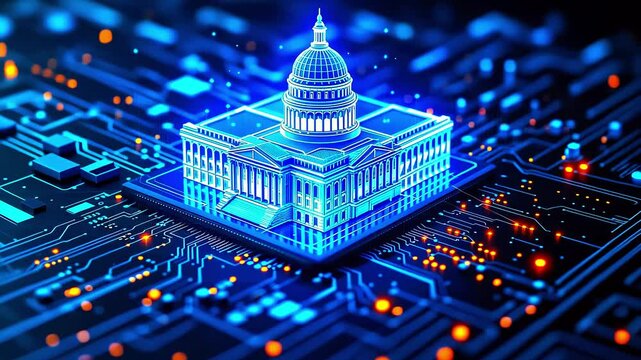
AI in Civic and GovTech
Government technology rarely makes headlines when it works well. When it fails, however, everyone notices—usually while standing in line, holding a numbered ticket, or wondering why a simple request requires three forms and a follow-up visit.
For decades, public-sector systems have been built for durability, not adaptability. That made sense in an era when stability mattered more than speed. Today, however, governments are being asked to do more with fewer resources, tighter budgets, and higher expectations from the public. This is where artificial intelligence—used thoughtfully—can play a transformative role.
Not as a silver bullet, but as a quiet systems upgrade.
The Real Problem: Process, Not People
Most inefficiencies in government aren’t caused by lack of effort or competence. They’re caused by legacy systems that encode outdated workflows. Forms that must be manually reviewed. Cases that bounce between departments. Rules that exist only in someone’s institutional memory.
AI doesn’t replace public servants. It replaces friction.
Modern AI systems can understand unstructured data, route requests intelligently, surface anomalies, and automate routine decisions—freeing human staff to focus on judgment, empathy, and oversight.
In other words, AI is best used where government work is repetitive, rule-bound, and time-consuming.
A Familiar Example: The DMV
Everyone has a DMV story. The long lines. The mysterious missing document. The moment you realize you waited 45 minutes just to be told you’re in the wrong line.
The irony is that most DMV interactions are predictable. The rules are known. The data is structured. The outcomes are standardized. Yet the experience often feels chaotic because the system relies on rigid processes rather than adaptive ones.
AI could pre-validate documents before you ever arrive. It could route you to the correct service instantly. It could flag edge cases early instead of discovering them at the counter. The result wouldn’t be magical—it would just feel…normal.
And in government tech, “normal” would be revolutionary.
Where AI Actually Helps in Government
The most effective applications of AI in civic and govtech tend to fall into a few categories.
First, intake and triage. Whether it’s permits, benefits, complaints, or citations, governments receive massive volumes of requests. AI can classify, prioritize, and route these accurately in seconds, reducing backlogs before they form.
Second, decision support. Many government decisions follow clear rules but still require manual review. AI can surface relevant precedents, highlight missing information, and suggest outcomes—without making final determinations on its own.
Third, case resolution and compliance. AI can track timelines, detect stalled cases, send reminders, and identify patterns that indicate systemic problems rather than individual errors.
Finally, public-facing clarity. Chat interfaces, document summarization, and plain-language explanations can dramatically reduce confusion, repeat visits, and frustration.
The Constraint AI Must Respect
Government is not a startup. It operates under legal, ethical, and political constraints that private companies don’t face. Any use of AI must be explainable, auditable, and accountable.
This is not a weakness—it’s a design requirement.
The goal isn’t to automate judgment or remove discretion. It’s to ensure that human judgment is applied where it actually matters, rather than being buried under administrative noise.
A Shift From Bureaucracy to Resolution
One of the most promising applications of AI in govtech is shifting systems away from endless process and toward resolution.
When people interact with government, they don’t want a workflow—they want an outcome. They want to know what’s required, what it costs, how long it will take, and what happens next.
AI makes it possible to design systems around those questions instead of around internal silos.
The Future Will Be Quiet—and That’s the Point
If AI in government is successful, most people won’t notice it. Lines will be shorter. Cases will resolve faster. Instructions will be clearer. Staff will be less overwhelmed.
There won’t be a dramatic announcement. No one will say, “Wow, this permit process is powered by machine learning.”
They’ll just leave the building thinking, That was easier than I expected.
Share on social media